
If you've been researching treatments for arthritis, tendon injuries, or chronic joint pain, you've probably come across Platelet-Rich Plasma (PRP). Depending on where you look, you'll find claims ranging from “miracle cure” to “it doesn't work at all.” As with many things in medicine, the truth lies somewhere in between.
My goal is not to convince you that everyone needs PRP. My goal is to help you understand when PRP makes sense, when it doesn't, and what you can realistically expect.
What Exactly Is PRP?
PRP begins with your own blood. A small blood sample is placed into a centrifuge that concentrates platelets into a small volume of plasma. Those concentrated platelets are then injected into the injured tissue. Because the PRP comes from your own body, there is essentially no risk of allergic reaction or disease transmission.
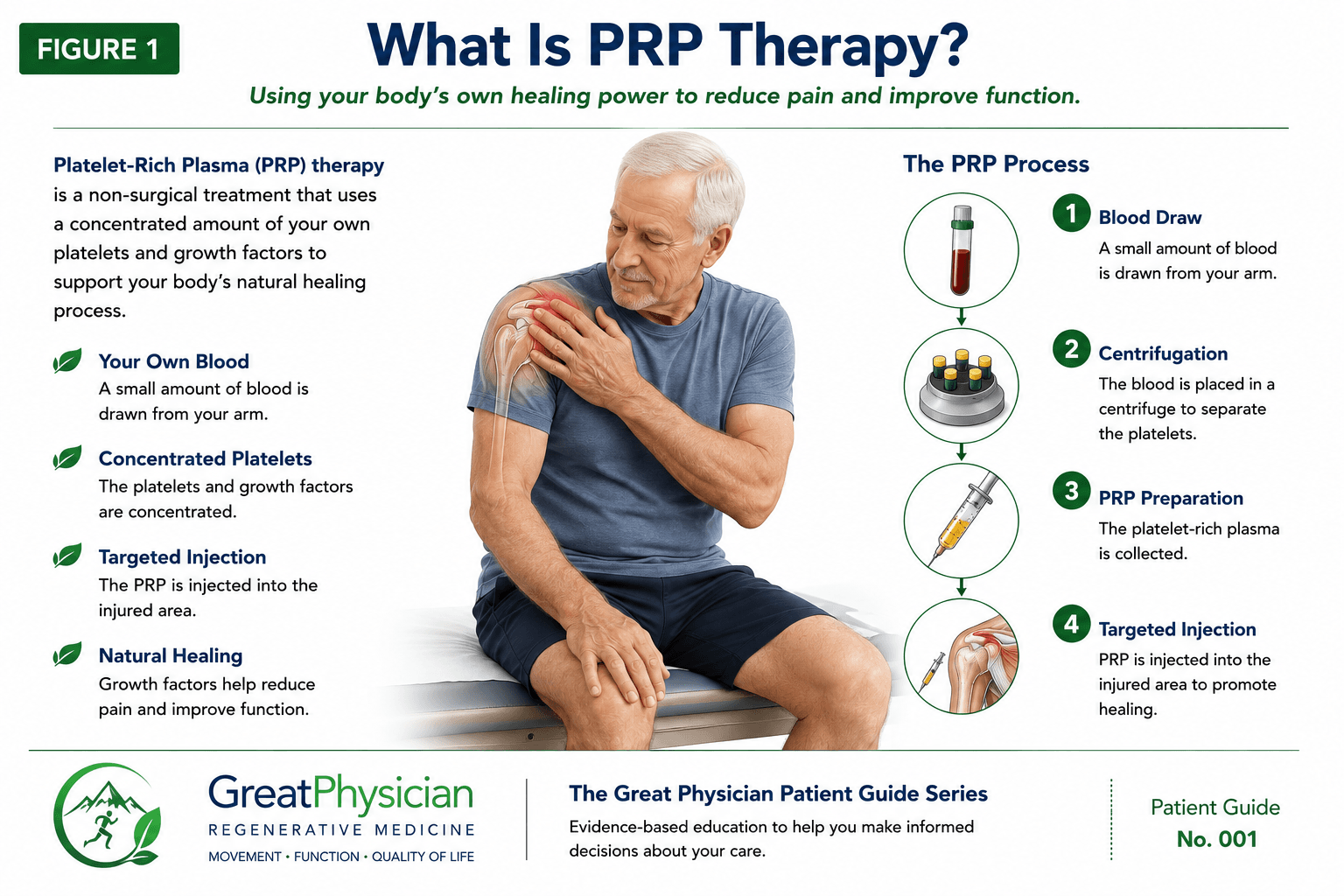
Platelets Do More Than Stop Bleeding
Platelets contain hundreds of biologically active proteins and signaling molecules, including growth factors and cytokines. After PRP is injected into an injured area, the platelets become activated and release these signaling molecules, which help coordinate your body's natural healing response. Think of platelets as tiny delivery trucks carrying packages of growth factors to the injured tissue.
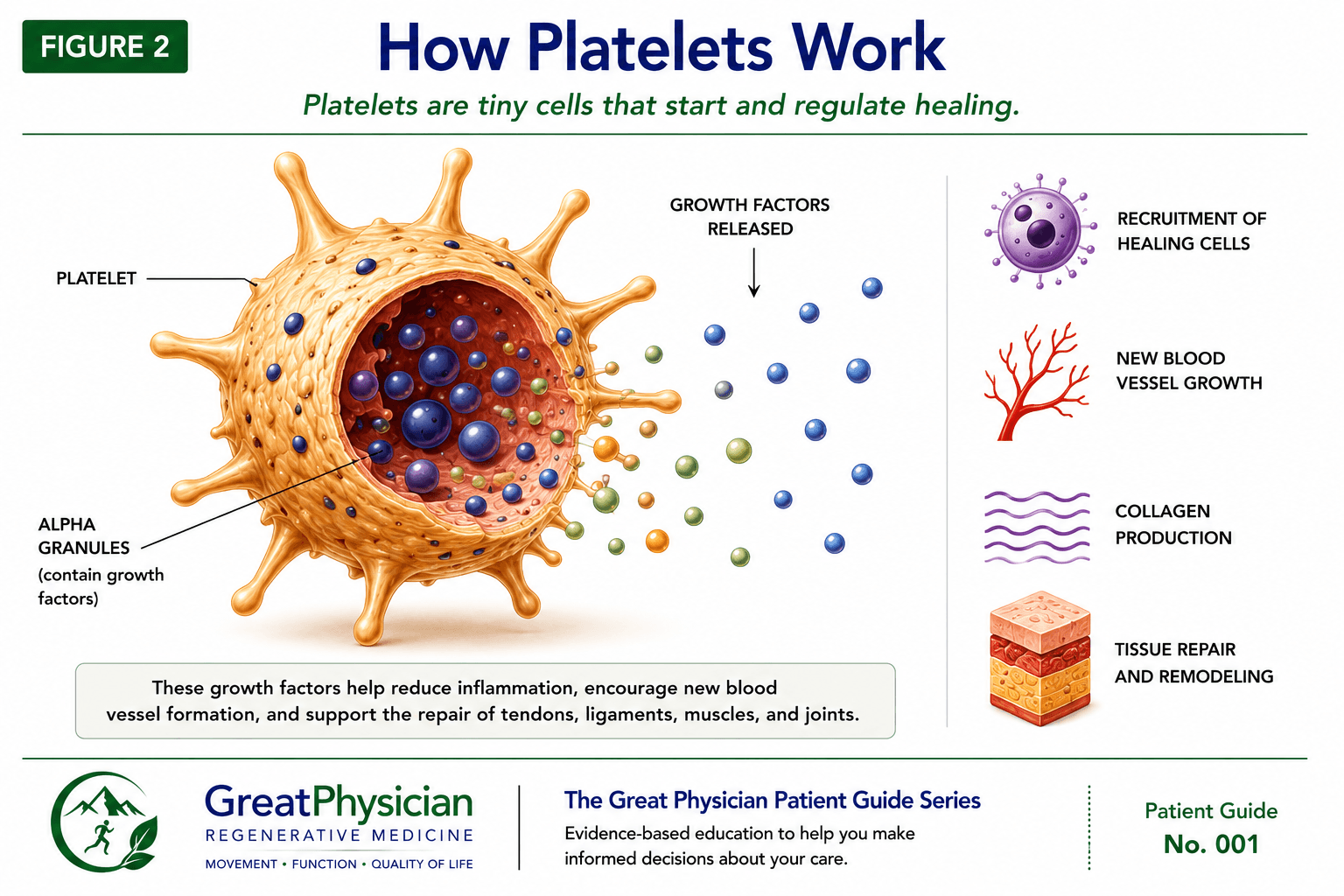
What Conditions Have the Best Evidence?
The strongest evidence supports PRP for selected chronic tendon disorders such as tennis elbow, patellar tendinopathy, certain Achilles tendon disorders, plantar fasciitis, selected rotator cuff tendon disorders, and mild to moderate knee osteoarthritis. Research continues to evolve for many other conditions.
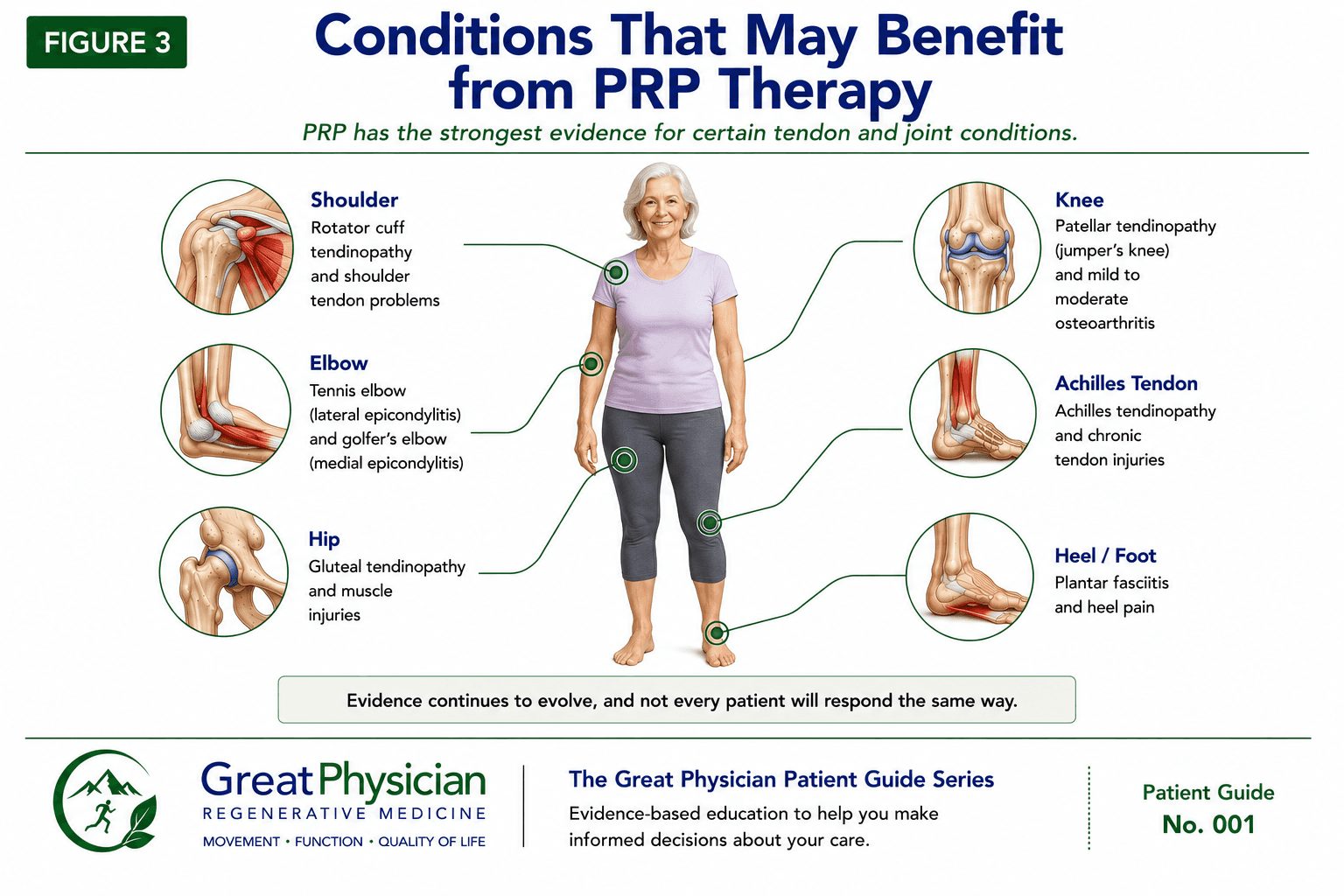
What PRP Does Not Do
PRP is not magic. It does not regrow severely worn cartilage, replace tissue that is completely missing, or eliminate the need for surgery in every patient. Honest expectations are an important part of good medical care.
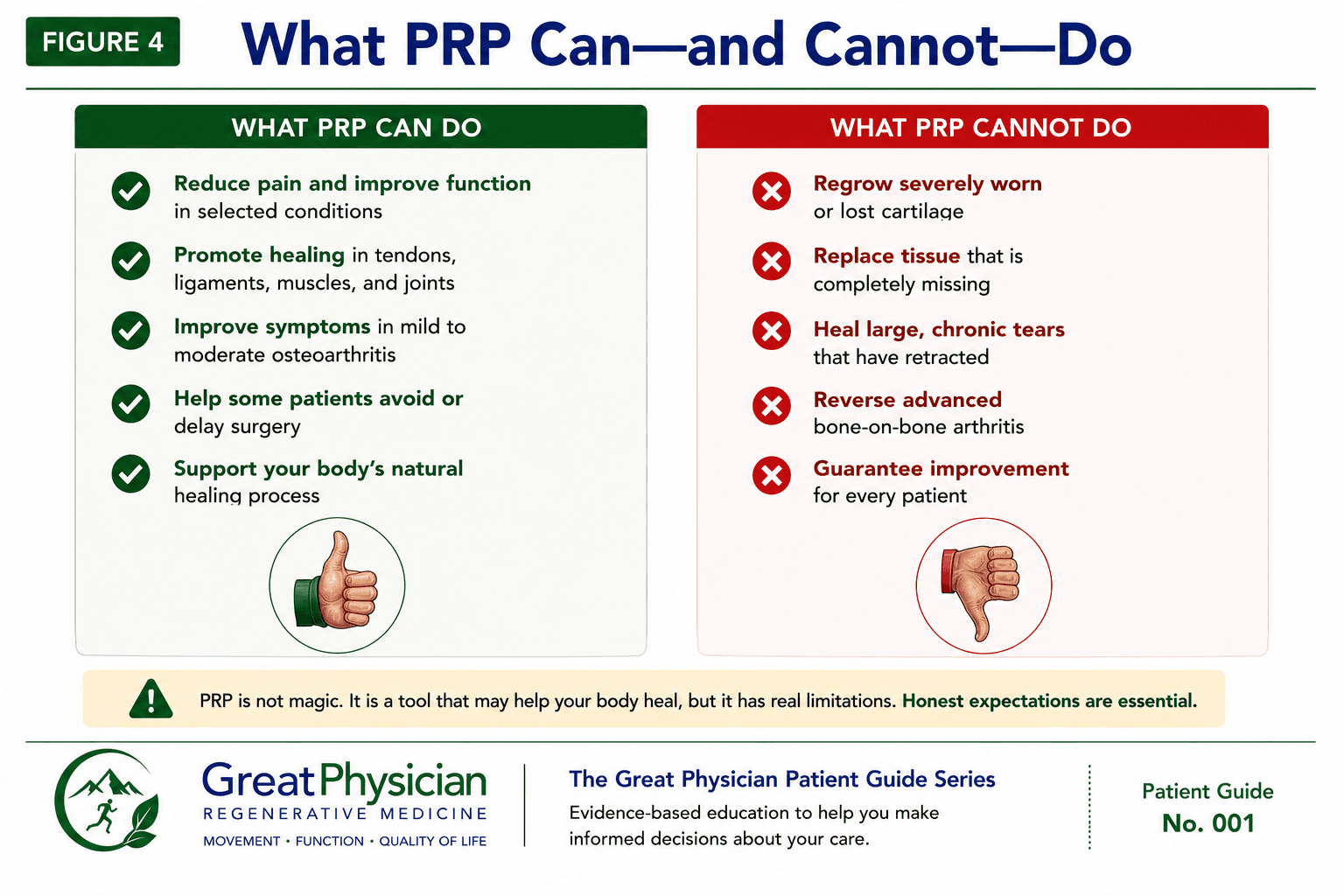
When Will I Notice Improvement?
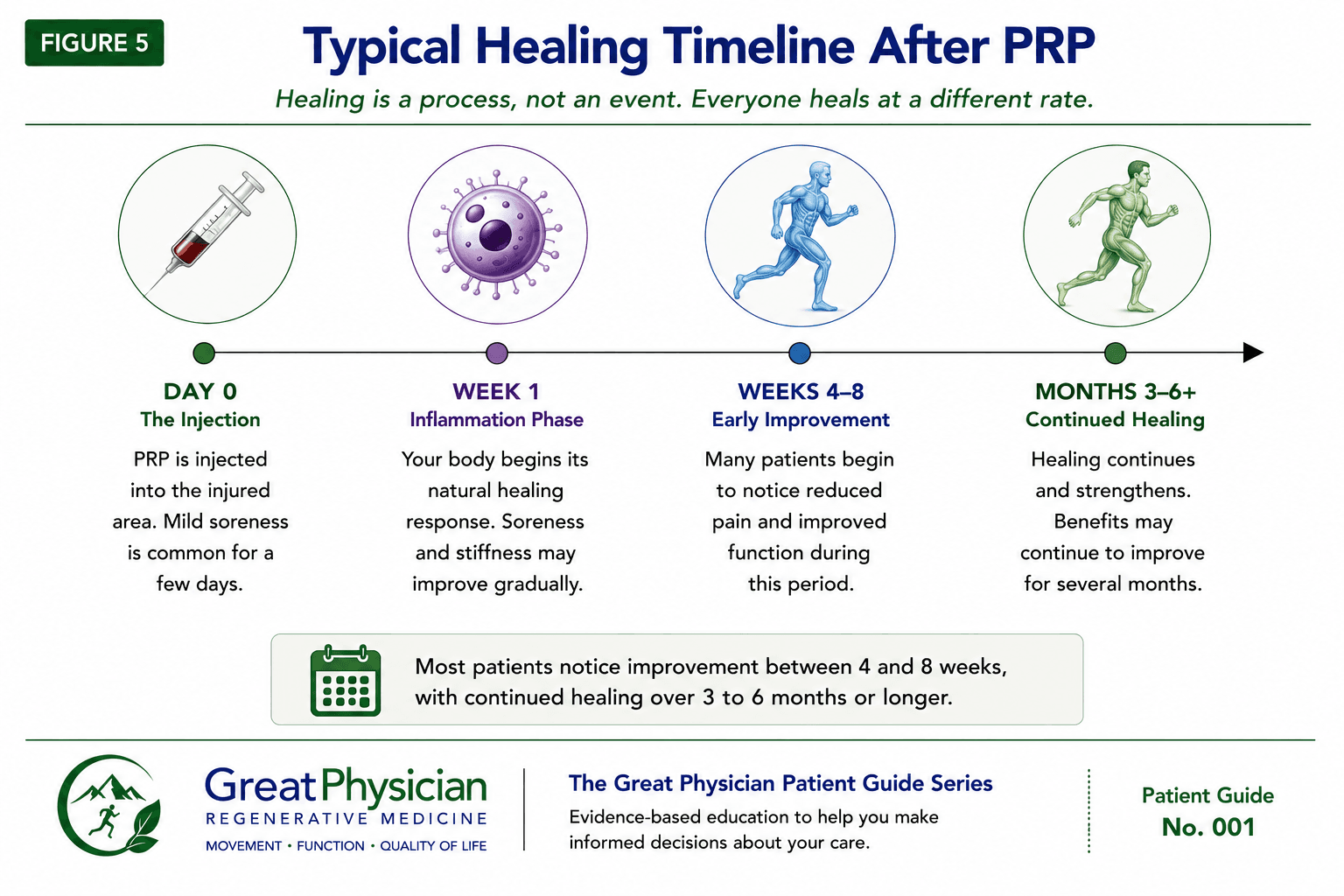
Unlike cortisone, PRP is not intended to provide immediate pain relief. Many patients notice gradual improvement beginning around 4–8 weeks, with healing continuing for several months.
PRP Is Only One Part of the Plan
The best results usually occur when PRP is combined with appropriate rehabilitation, progressive strengthening, activity modification, healthy nutrition, adequate sleep, and healthy lifestyle habits.
Frequently Asked Questions
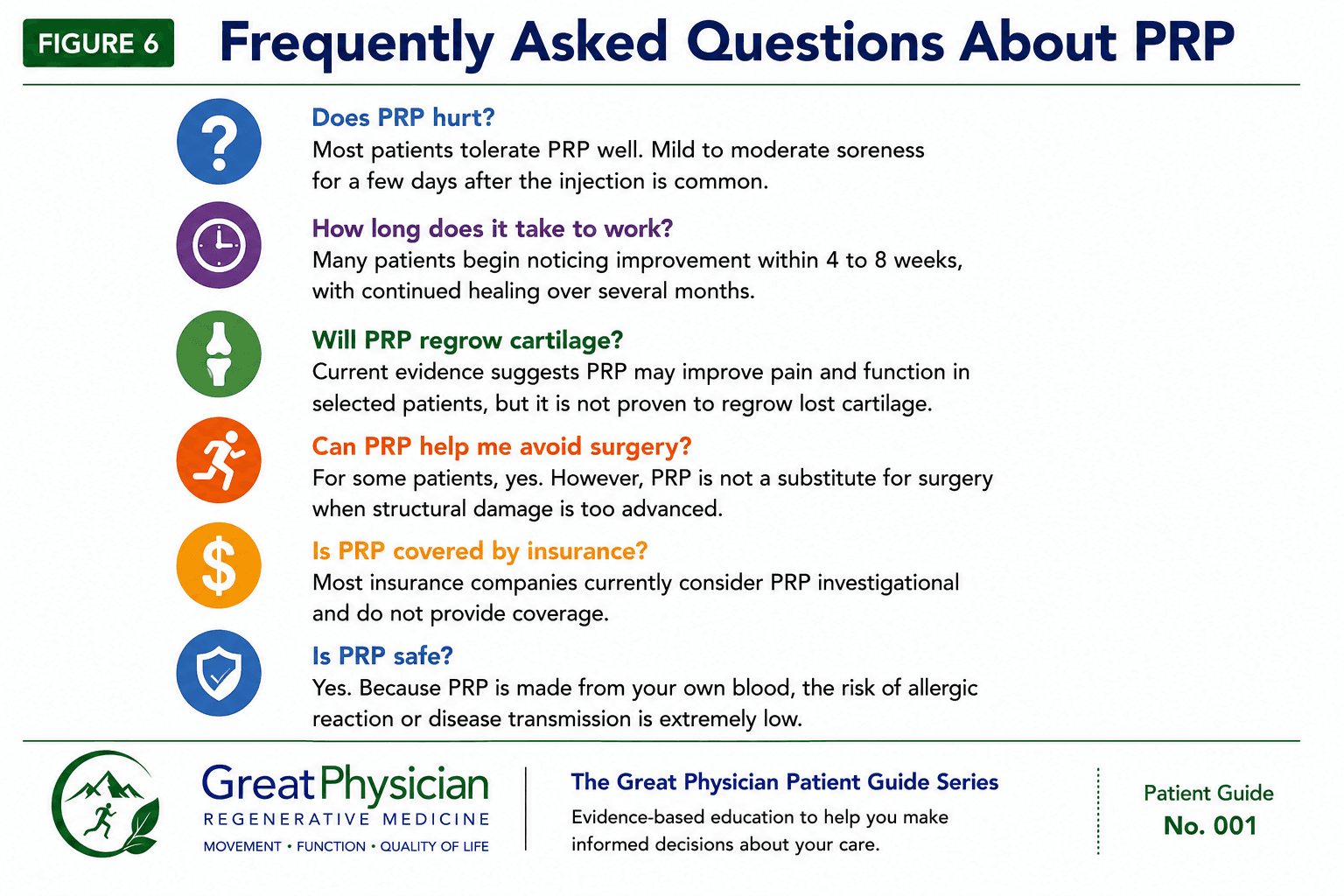
Does PRP Hurt?
Usually only temporary soreness at the injection site.
Will PRP Regrow Cartilage?
It may improve pain and function, but it should not be viewed as completely regrowing cartilage.
Can PRP Help Avoid Surgery?
Sometimes, depending on the diagnosis.
Is PRP Covered by Insurance?
Most plans do not currently cover PRP.
My Bottom Line
PRP isn't a miracle treatment, and it isn't right for every patient. However, when used for the right condition, at the right stage of healing, and combined with appropriate rehabilitation, it can help many people reduce pain, improve function, and in some cases avoid or delay surgery.
If a member of my own family asked whether they should consider PRP, my answer would be simple: let's first make the correct diagnosis, review the evidence for that specific problem, and then decide together whether PRP is likely to provide meaningful benefit. Every patient deserves an honest recommendation — not a sales pitch.
This guide is intended for educational purposes only and should not replace an evaluation by a qualified healthcare professional. Every patient is unique, and treatment recommendations should be individualized. Written by Dr. Jerry Hric, Great Physician Regenerative Medicine · Updated July 28, 2026.